Broken Whole

9 04 2017

broken-open-cover

9 April 2017

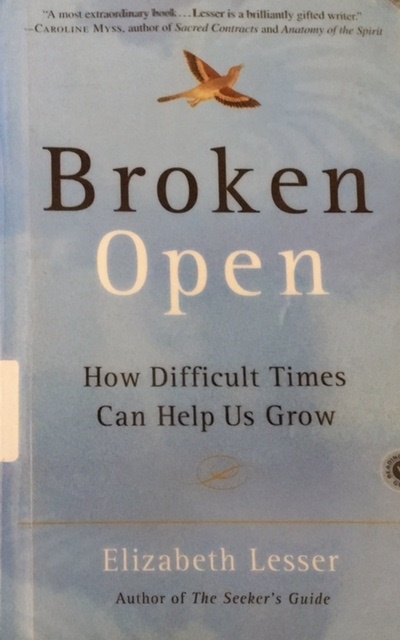
When a certain idea keeps showing up, I’ve started to learn to listen to these whispers and respond. Hence, I finally made it to the library to take out the book, Broken Open, by Elizabeth Lesser. Her subtitle, How Difficult Times Can Help Us Grow, resonates with my life during the past year, which was filled with serious family health issues, problematic relationships, and closure on some situations. This was probably the most difficult year in my life, and I hope this book will help me find the silver lining in the cloud of the pain and challenges I’ve faced.

About halfway through the book, Lesser introduces the Shamanic Lover: an actual person “whose destiny is to heal the heartsick with the sweetness of love, and to give the gift of fire to those whose passion is frozen.” For her, this actual meant physical passion in the form of an extramarital affair. That is not my situation.

However, I am searching for some understanding as to why I have received such difficult visitors, both directly and to those I love. I wonder if there is a more universal application of Lesser’s term. She continues, “Sometimes the Shaman Lover has been sent by fate to blast us open, to awaken the dead parts of our body, to deliver the kiss of life.” She continues with ways that both birth and death have stirred the pot, so to speak. She suggests that these are opportunities to see one’s shadow, the darker side.

balance-scales-off-balance

I step back to consider these concepts and determine what makes sense to me, both in a logical but also in an emotional way. Which brings me to solidify my interpretation of Lesser’s concept. Often, one part of us is stronger than the rest. We are logical thinkers, with little access to our heart. We are compassionate and connected with others, but we pay little attention to our body. We are Olympic athletes but unable to open our hearts or talk about anything except our specific sport. Any permutation of head-heart-body-spirit imbalance. There are a bunch of them.

Along comes a crisis. It could be anyone or anything.

balance

And the crisis that breaks you apart brings into the forefront the part of you that is out of balance. Maybe you’re too serious. Or not introspective enough. Or too self-focused. Or always putting others ahead of yourself. It becomes obvious and you learn how your head-spirit-body-heart can all contribute equally to your life.

In essence, through a painful process, you end up in balance. Broken whole.



A Life of Legacy

3 04 2017

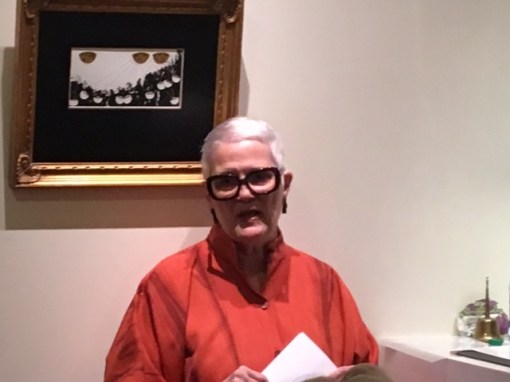
COhen face

4 April 2017

Recently, I attended a presentation at the Mercy Center in Madison, CT, by Rabbi Daniel Cohen from Stamford. His focus was on how to create a life of legacy, one that would be remembered positively by others. He used a process he called Reverse Engineering: decide why you are here and lead the life now in the way you want to be remembered.

What would that type of life look like? What are some of Cohen’s guiding suggestions?

Live a life of Radical Amazement. This, defined by Abraham Joshua Heschel, is to: “get up in the morning and look at the world in a way that takes nothing for granted. Everything is phenomenal; everything is incredible; never treat life casually. To be spiritual is to be amazed.” This highlights the sanctity and importance of every moment. Appreciate that every day, every hour is a blessing. Live inspired.

Do it now. Cohen cites a line from the Ethics of Our Fathers (a compilation of rabbinical teachers from the third century): If not now, when?

 Cohen book

Bring your piece of light to your actions. We each have the opportunity to make an indelible impact on another person by being at the right place and the right time and doing the right thing. Cohen calls this “the Elijah moment,” based on the Prophet Elijah who was considered a helper when in distress. Cohen’s Elijah moment is a peak instant when we felt touched by the hand of God to do a particular action. In that way, we have acted as God’s agents, partners in bringing acts of kindness to the moment. At these times, two souls connect to transform that instant into an eternal moment to significantly change that person’s life and our own. We need to understand our holy mission, that no encounter is random, no meeting is coincidental.

Cohen also emphasized that every decision we make counts and needs to be based on our principles. Authentic choices are courageous, while compromise can detract from our principles.

See the Elijah in everyone. Cohen encouraged the audience to remember the importance of appreciating the infinite potential and capacity in every human being. It is our task to see everyone as a potential Elijah.

In summary, Cohen suggests our ripples of kindness extend beyond that particular moment. Every obstacle is opportunity for growth. He quotes Mark Twain: “The two most important days of your life? The day you were born, and the day you understand why.” When we are the Elijah, and see the Elijah in others, we will make bigger impact, we will live inspired lives and enrich our families. And we will know we can be remembered. We will be living a Life of Legacy.

~*~*

My cousin is researching the motivation behind a large number of this country’s leading Buddhists coming from Jewish backgrounds. For me, Rabbi Cohen has shed some light on this question in reframing traditional Hebrew texts in current-day language. Using the need to be present, pay it forward, and perform random acts of kindness, Cohen has matched modern terms with ancient spiritual traditions of both Judaism and Buddhism. Perhaps it’s the similar basic underpinnings that allow many of these modern Jews to be attracted to the Buddhist principles.


Dichotomies: Begging and Offering Bowls

27 03 2017

Bowls Ann27 March 2017

I knew I was in the right place when artist Ann Grasso mentioned Big Magic, a book I’d blogged about, at her recent opening of Begging and Offering Bowls. Then she referenced Arrival, a movie that friends had encouraged me (and then discouraged me due to its potential to tap into a personal tender point), to see. I felt we were kindred spirits!

Grasso provided her definition of bowls, which she perceives as circular instruments that allow content to enter and leave. She sees begging bowls as icons of the poor and needy. On the other hand, offering bowls, generally filled with water, symbolize generosity. These she painted appropriately with watercolors. Grasso described part of her creative process as the “Overnight Mind” that takes ideas and makes connections she can see clearly the following morning.

Bowls struggleAnn believes titles can offer entry into the piece, particularly abstract art. My favorite of her begging bowls is this one above. I like the sense of space and distance, continuum and juxtaposition, the textures and color tones. Her title, Struggles, surprised me as I didn’t feel any conflict within the work. Then I remembered my reframing of The Myth of Sisyphus: instead of struggling to push the boulder up the hill, I envision it as a sled ride down. Perhaps that could be applied here, with its meaning depending on if one is looking up the hill at all that must still be covered, or downward and envisioning jumping from bowl to bowl along the way.
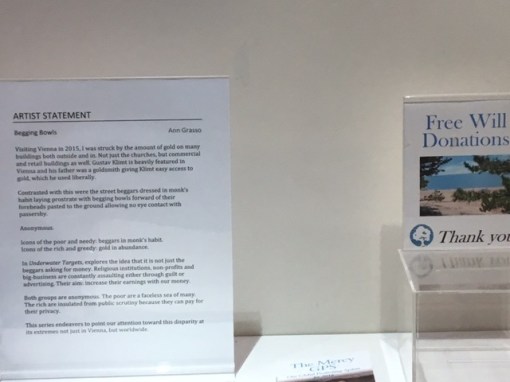
Grasso’s work was inspired by a trip to Vienna where she clearly saw the dichotomy between the haves and have nots. Gold-encrusted churches and buildings were juxtaposed with prostrate beggars and their bowls on the sidewalks. Interestingly enough, this irony is evident at her gallery exhibit itself. Her artist’s statement say, in part: “Religious institutions…are constantly assaulting either through guilt or advertising. Their aim: increase their earnings with our money.” These words are positioned on the table next to the Free Will Donation box of the hosting religious institution!

Bowls Free willWhen I mention this dichotomy to Grasso, she smiled and noted that people had added money to one of her three bowls on display that was identified as an offering plate. We both laugh and shrug our shoulders. Kindred spirits again.


A Cup of Tea

24 03 2017

meditaton]

24 March 2017

Meditation is a practice where an individual trains the mind or induces a mode of consciousness, either to realize some benefit or for the mind to simply acknowledge its content without becoming identified with that content, or as an end in itself (Wikipedia).

The value of meditation has become commonly known and accepted, with centers springing up around the country. Some of these are focused on particular religious beliefs, while others are nondenominational. A meditation practice can have a number of positive physical and psychological impacts.

mediaton-centerMediation is a dynamic, structured, interactive process where a neutral third party assists disputing parties in resolving conflict through the use of specialized communication and negotiation techniques. All participants in mediation are encouraged to actively participate in the process. Mediation is a “party-centered” process in that it is focused primarily upon the needs, rights, and interests of the parties. The mediator uses a wide variety of techniques to guide the process in a constructive direction and to help the parties find their optimal solution. (Wikipedia).
Mediation has been used in legal cases, particularly those involving family issues, and in business situations. Schools have trained peer mediators to help resolve conflicts between students; generally, mediation is considered a way to resolve conflict in a less adversarial manner than through litigation and the legal system.

cup-of-tea

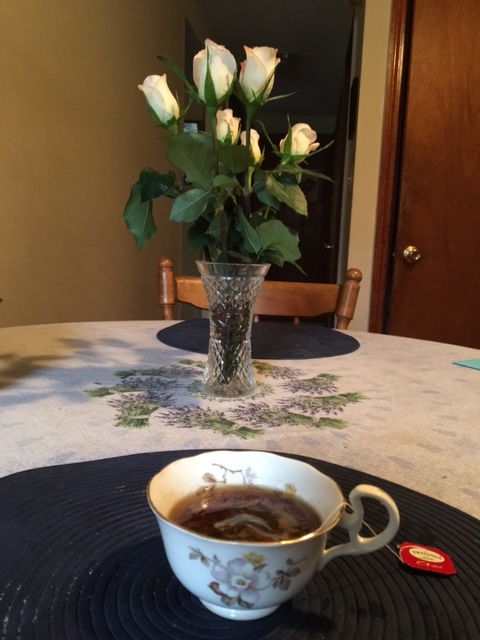
Recently, I noticed that, although they sound quite different, the only difference between the writing of MEDITATION and MEDIATION is the letter T. T, I mused, tea. Hmm.

If you were involved in a conflict with another person, and you both were to spend some time in meditation, you would be able to clear your mind, calm your emotions, and bring some compassion and empathy to the issue. Then, if you poured yourselves a nice cup of tea to sit down for mediation, perhaps the results would come more quickly and be more equitable and amenable. Just a thought.


Ireland’s Great Hunger (An Gorta Mór)

21 03 2017

Recently, I met my friend Maggie at Ireland’s Great Hunger Museum, housed at Quinnipiac University, Hamden, CT. I remembered my shock years ago at encountering the Famine Statues (Rowan Gillespie, 1997) on Dublin’s sidewalks in an evening stroll and wished to learn more.

At Ireland’s Great Hunger Museum, I had that opportunity. The museum, whose exterior resembles the workhouses of the time with a lower entrance replicating the bowels of a boat, emphasizes a shift in historical perspective. The Irish potato blight of 1845 to 1852 caused a significant decline in available food to the tenant farmers but, quite significantly, the country continued to export food to England. Absentee farm owners ousted the people on the land who couldn’t pay rent and many were forced to emigrate. Some landlords even paid their tenants’ steerage, as it was less expensive than keeping them on the land.

Few artifacts or artistic works from the time are available, with the exception of illustrations such as political cartoons. The majority of this museum’s collection is newly developed work that reflects the more current view of the political and cultural aspects of the hunger’s calamity.

An unsung hero of the time was Elihu Burritt (1810-79), a New Britain resident. His resume was extensive, including his establishment of an international peace organization and the provision of humanitarian aid to Ireland.

Lacking a docent (they are currently being trained), we were treated with an engaging commentary from security guard Officer McCarthy. He also informed us that the entire contents of the museum will be shipped to Ireland for a year, so prompt visitation is encouraged.

Maggie, an Irish-American with deep roots in and multiple visits to Ireland, commented on her intense visceral responses to the material at the museum. She suggested she registered the hunger terror in her body, just as African-Americans may harbor the memory of slavery or Jews of the Holocaust. Interestingly, significant funding for this museum came from Murray Lender, son of Jewish immigrants and partner of Lender’s Bagels. And one of the artists, sculptor Margaret Lyster Chamberlain, used photos of Holocaust camp prisoners to modify her depiction of Irish destitute.

After our museum experience, Maggie and I headed out for a bite of Irish food. I looked at my plate when it arrived, laden with delectable food, and I considered the irony of this after going to a museum that honors those who perished unnecessarily from hunger. And here I was, eating as much as I wish, without a major dent in my pocket.

And I also considered how rich our country has become because of the Irish influx resulting from the dire conditions “over there.” And reveled in the diversity of foods we have available, right here in this restaurant and in our supermarkets. Global in nature. I looked around this restaurant, typical of many, staffed by people of all backgrounds. Only in America. I am grateful to live here.


Transitions

17 03 2017

rxs

17 March 2017

Many of you know that my daughter was diagnosed with a serious health issue in April. Since then, there have been multiple hospital stays during which someone, mostly me, has remained with her. Recently, it was a nine-day visit which included the ICU. During that time, I was 150% focused on her, managing the multitude of medications, tests, and decisions that occurred while working with a multi-disciplinary team.

I was ever so thankful when she was discharged, but still I provided a wide range of tasks while she regained her strength at home. As each day passed, I was needed less and less, a miraculous event. I was honored to have helped in the process, grateful my schedule was flexible, and just thrilled that it all had made a difference. But I found myself struggling with the transition from being “Kay’s Mom” to “Beth” again. I felt a bit like a yo-yo, focusing on her and her only, and then flipping back to my life – what was it that I used to do with my time? And there also was the question: how to return to my life, especially knowing that I might have to drop it again at a moment’s notice?

I share this with my partner, a therapist with forty-plus years of experience working with people. “I tell my clients that transitions are hard,” he says. I wait for more from him, more insight, perhaps some gently prodding questions or a  hug. But that’s it.

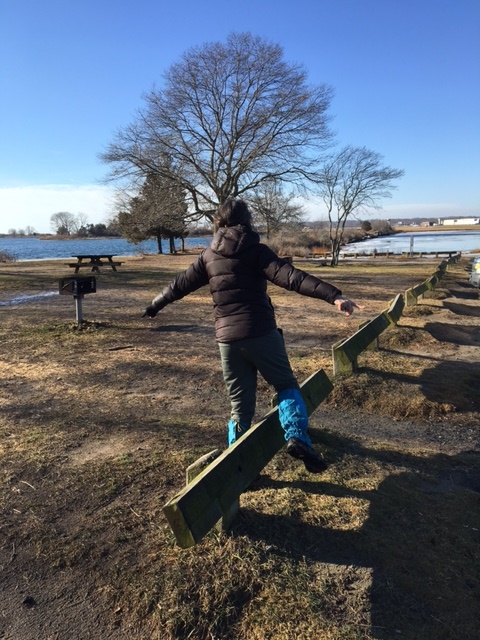
beth-on-the-fence-at-bluff-point

And it’s exactly that type of communication/lack of response (among a slew of more serious things) that led me to decide to make a break from this three-and-a-half year partnership. And it’s yet another transition, this time from being in a relationship to being single. What happens with the space that has been devoted to Relationship and Other when they are gone? What flows in to fill up the time, the mind, and the heart?

Well, I definitely am writing more. I put these ideas out there, into cyberspace. Sometimes I get heartfelt responses, sometimes not too much. Either way, that feels better than what I was getting when I was coupled. I’ve returned to my part-time, short-term position with the city’s Arts and Culture Office. I’ve reconnected with a writing partner. I am trying to resume my meditation practice. I am spending more time outside. I am playing less solitaire and eating less chocolate, both of which were indicators of my stress level.

I’ve also noticed that it’s amazing what comes when there is space. Even unaware of my relationship change, one friend volunteers to shovel my driveway after a significant storm. Another sends me an interesting article about forest bathing, the process of experiencing the healing atmosphere of a woodland environment. A third brings a full-course meal to my back porch. Someone suggests a book that provides a significant boost to my creativity and courage. In fact, life is rich and fills my spaces with meaning.


Revere Life

10 03 2017

shall-not-kill

Throughout history, our religions have admonished against killing. The Ten Commandments, with “thou shalt not kill” directs those of Judeo-Christian backgrounds. The First Buddhist precept is “avoid killing or harming living beings.” The Qur’an prohibits “taking any human being’s life – that God willed to be sacred – other than in [in the pursuit of] justice.” Even the Hippocratic Oath of doctors includes, “first, do no harm, primum non nocere.”

But in fact each of us kills daily.

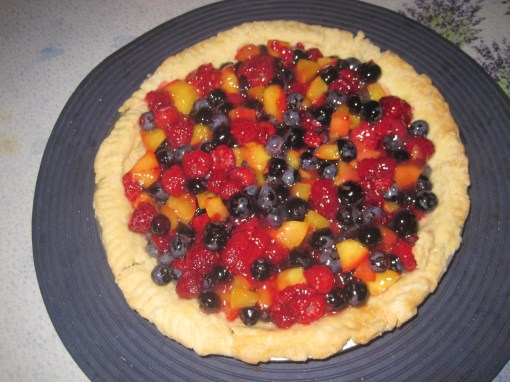
Mark's pie 07.14.15.jpg.jpgWe eat. Whether it be plant or animal, that which we eat has been alive and has died in the process of nourishing us. Thus: the Native American tradition of silently thanking a deer before taking aim and releasing the arrow.
We move. We step on small organisms we can’t even see or don’t notice. We drive and birds fly into our windshield or squirrels dash under our tires. We remove insects and spiders, mice and squirrels from inside our homes, most of us by killing them directly. We poison our lawns so only grass can grow. We treat noxious plants with weed-killer to enjoy our yard settings. We euthanize our pets when they become too old or infirmed to live a quality life.

In essence, it is virtually impossible not to kill.

However, it is always possible to revere life, to recognize its importance, its value and meaning. We can consciously name what has died to nourish us. We can mindfully select our actions, aware of our impact on others.

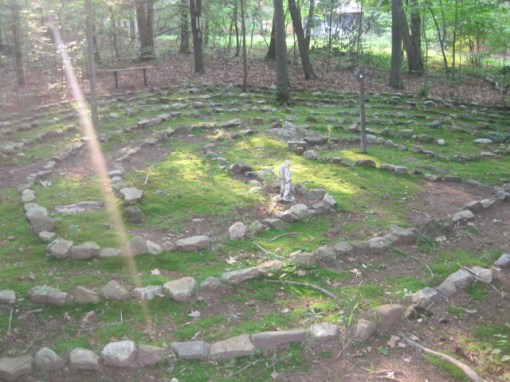
labyrinth-walk-solstice-2012-002We can choose to acknowledge the source of our food, all the connections that have made it possible for us to eat: the sun, water, and earth; the harvester, transporter, and distributor; the truck manufacturer, mechanic, fuel supplier, and so on.
If we decide to have a pet, we can select our dog or cat from a no-kill shelter instead of supporting the puppy mills. We can converse (aloud or internally) with the plants we consider weeds and clarify where we would like them to grow, as we remove them from areas that do not match our plans.

Keeping an open perspective allows us to continually search for ways to be more respectful and appreciative of life around us. If we are thoughtful, at the end of the day, we can say that we have revered life today.


Family Stories

3 03 2017

barnett-family-1900ish-005
March 3, 2017

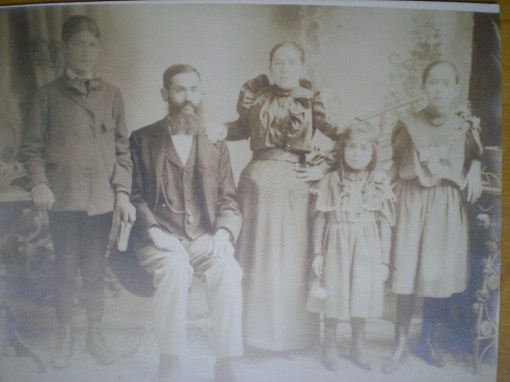
I’ve been doing some family genealogy research and I enjoy the detective work, putting together pieces and tidbits into a tidy whole (at least when I can). In the process, I’ve uncovered some information that has left me wondering about the value of this work.

Several years back, I learned that a great-grandmother from Connecticut had died in New York City in early 1929. When I received her death certificate, I was shocked to discover that she had jumped out an apartment window. She and her husband had been in NYC only a few weeks. Why were they there? Was her issue emotional? Some family lore indicated that she had cancer. Perhaps it was to escape the pain and inevitable? We may never know.

ida-barnett-002-jpg

My great-grandmother who lost her infant son

Recently, I discovered that my grandmother had a younger brother who was still born. Her parents lived on a farm miles from a hospital and the cause of death was listed as “pressure effects and prolonged labor.” I hated the vision of my great-grandmother out in the country going through a long and fruitless labor. I wondered if he were buried somewhere; I’ve seen no record of it in the cemetery where this family is interred. Did they ever speak of this child? How would he have changed the family?

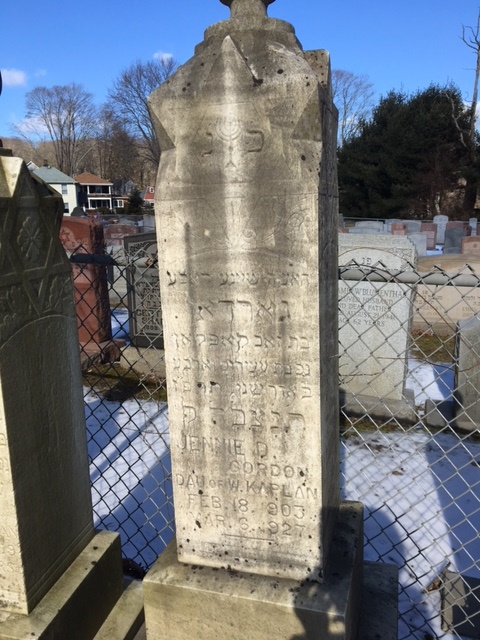
Then I learned that this same grandmother had a niece (half-niece actually) whom I’d not know existed. Her death certificate indicated she died from intestinal tuberculosis at the age of 24 in 1927 in my home town. Her mother, my grandmother’s half-sister, had died eight years earlier (angina pectoris) and her uncle, my grandmother’s father had passed (chronic intestinal nephritis and pulmonary edema) five years before that. Two years later my grandmother’s sister, with four young children, lost her husband in a plane crash at the Chicago World’s Fair.

jennie-kaplan-gordon-tombstone

These years in the early twentieth century were fraught with danger that impacted these ancestors, my people. They had left a dismal Eastern Europe and forged lives here in America that likely were immensely better than they would have had. But how do people handle these losses of family? How do they move on, under the cumulative uncertainty of who might be next? And why do I think I need to know this, to pass this on to future generations? Some of these facts were likely intentional family secrets. Couldn’t I have left them unearthed and allowed them to fade into nothingness? Or do they need to marked, noted, and honored?

Last month, I was waiting for the microfiche machine at the library to look for obituaries for some of the family mentioned above. A (handsome) young man was researching the 1938 hurricane and we started talking. He really wasn’t interested in the storm, but more how people shared information in those days. We discussed my genealogy research and he asked me, “Why are you doing this?” I managed to give him some type of an answer at the time. But since then, I’ve learned some of this other family history. And the truth of why I do this?

I really don’t know.


Standing Room Only

27 02 2017

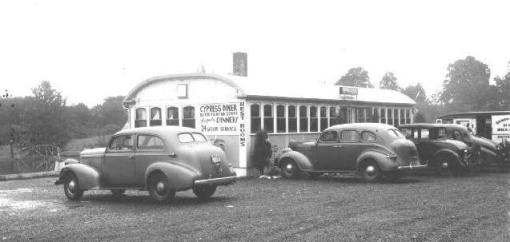
cypress-in-1936Sometimes we don’t know the impact we have on others. Teachers may touch a student and never learn about it. A kind word or considerate action may brighten someone’s day in a significant way.
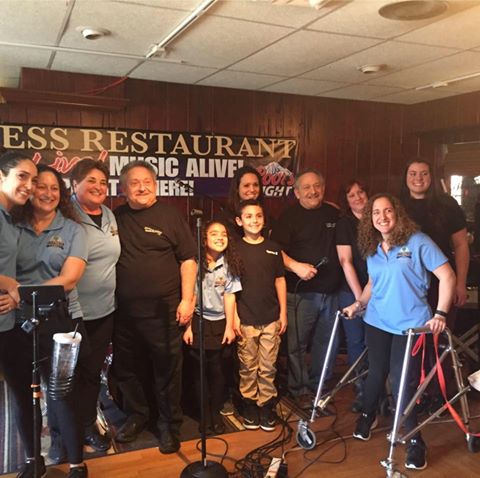
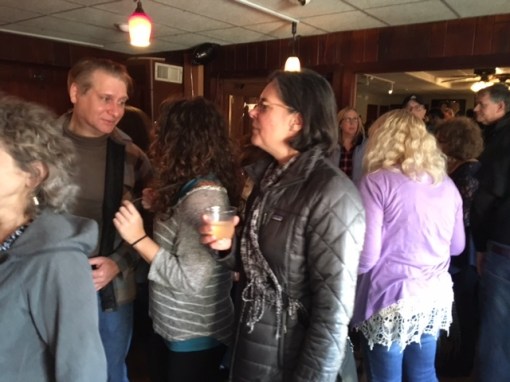
And sometimes it’s a restaurant that touches many people without even realizing it. Such is the case of the Cypress Restaurant in Middletown, Connecticut, now closing its doors after 80 years. First started by James and Rose Carta, the diner hosted celebrities such as Al Jolson, Glenn Miller, Eleanor Roosevelt, and Benny Goodman in its heyday.

Later, the restaurant was taken over by twin sons Joe and Jimmy. People came for traditional All-American dinners that included some Italian specialties, and many home-style meals such as meatloaf and open-faced sandwiches with gravy. It was a place for weddings, baby showers, and all kinds of celebrations. People met their future spouses there. Great friendships developed. I myself did a book signing there to a standing room only crowd. I hosted my daughter’s master’s celebration there. She had her baby shower there. And we attended many family and public gatherings at that site.

There were those who are regulars at the bar, a sort of Cheers-like family. They knew each other’s ups and downs. They anguished over people gone missing and mourned the passing of their members.

carta-family-02-26-17

The staff was legendary and the average length of stay was more than 14 years. Certain people, like Helen, waitressed there forever. In recent years, they encouraged local bands, trivia night, open mic, and all sorts of just regular good fun.

It was a place that supported the Carta families for many years but Joe and Jimmy had reached the age where they deserve some time off. They found a family-oriented buyer for the Cypress. So, after 80 years, they were closing.

Yesterday was their final day and it was standing room only. Cars were parked all over nearby lawns and overflowed into the school parking lot behind the restaurant. The place was so packed, it was impossible to walk from one end of the diner to the other. Waitresses were taking orders out the front door and back in the bar door in order to reach their customers. The place was jammed, the place was hopping.

cypress-standing-room-onlyFor a while, I sat with a daughter of each of the twins. They were commenting on this person and that who walked in. So many people. Some they didn’t even know. And I realized that The Cypress was one of those places that served not only good meals but good will, heartfelt connections, and strong caring. It was a place where people could feel at home and musicians felt they were playing in someone’s living room. People who had no one could go and feel comfortable. The Cypress, its owners, and staff touch the hearts of many. And we had all come to say goodbye.

Standing room only.


Joy versus Pleasure

17 02 2017

hammonnasett-01-2017February 17,2017

I have been waking up with a smile on my lips and a song in my head. Seriously! Today, it was Walking in a Winter Wonderland. I attribute this to an abundance of Joy coursing through my body and heart. It caused me to wonder and contemplate the difference between Joy and Pleasure.

windsor-locks-cherry-magnolia-sundaePleasure comes from eating chocolate ice cream. The physical sensation of cold on my tongue, the absorption of chocolate into my system, and the challenge of getting every last drop all provide a deeply satisfying pleasure. Other pleasures arise from keeping-up-with-the-Jones’s accomplishments: owning an Olympic size pool, a fancy car, Stuart Weitzman shoes, or a McMansion. Materialistic items that simplify one’s life (refrigerator, blender, and lawn mower, for example) can bring one pleasure, particularly by limiting the amount of time spent on “work” and freeing one up for more time for pleasure. Pleasure comes from outside of us, bringing something to us, something that disappears over time, or something that can actually damage us (in the case of drugs or alcohol or certain types of sexual activities).

gma-and-ori-at-hammo-06-14-15By contrast, Joy is a sensation that arises from inside based on a sense of well-being, of belonging, having a mission, a purpose. Connecting with others at a non-superficial level, a feeling of aliveness. Of doing the Right Thing, not for any reward or recognition, but from an inner moral compass that knows what needs to be done. Joy is something you own, regardless of what happens to you, what others say or do. Joy may be quiet and subtle or loud and rambunctious, but it is a vibration and sensation that fills us with…well, Joy!

Joy is when you look out and see the clouds racing across the blue sky and feel expansive. It’s standing at the edge of the ocean shore and hearing the rippling of the water on the rocks and knowing that you belong. It’s the clarity that we are all connected, our lives are intertwined with every living being.

I’m not suggesting that Pleasure should be avoided. Certainly, it’s much better than experiencing pain or sorrow. But I do wonder if Pleasure attempts to satisfy the need to feel whole and happy. Usually, fulfillment from items that bring Pleasure is fleeting. We want more often and bigger ones of whatever it was. But the satisfaction that comes when we are suffused with Joy brings a deep-seated contentment and an ability to flow with life as it presents itself.

branchesTo quote one of my favorite teachers, Thich Nhat Hanh: How can you remember to smile when you wake up? You might hang a reminder—such as a branch, a leaf, a painting, or some inspiring words—in your window or from the ceiling above your bed, so that you notice it when you wake up (Peace is Every Step). To have that Joy throughout the day, with such a lovely beginning, is a true gift.