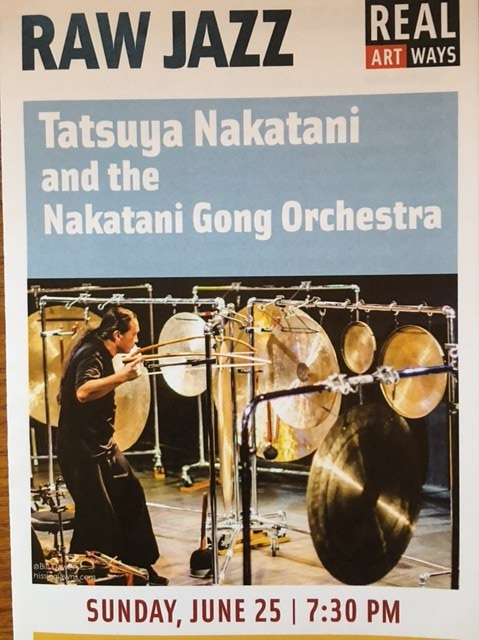
Real Art Ways presented a performance of the Nakatani Gong Orchestra recently and it was a unique experience. Acoustic sound artist and percussionist Tatsuya Nakatani, originally from Japan, conducted and performed “improvised-experimental music, free jazz, and noise, while still retaining the sense of space and beauty found in traditional Japanese folk music” (according to his website). Frustrated by the limited sound produced by striking a gong with a mallet, Nakantani discovered that using a bow (similar to that used on a stringed instrument) along the gong edge could extend the sound. He developed a handmade bow, using a variety of woods as handles, to produce this sound.
Nakatani was also interested in expressing the Japanese concept of Ma, a term that can be used related to time or space. In art, it is sometimes regarded as negative space, that which is imagined between what is presented. In that way, it exists only when experienced by the viewer/listener. It is the space between the trees or the silence between the notes, for example.

The RAW program began with a solo piece by Nakatani. He used a traditional drum set, augmented by a large and eclectic collection of percussion instruments, including gongs, singing bowls, sticks, and other objects that could make noise when struck. Clashing cymbal plates onto drum head rims, Nakatani fervently worked his tools. He filled singing bowls with metallic objects and swirled them to make a cacophony of sound. At one point, I could imagine trains coming into a station, their wheels screeching along the rails and rumbling along the tracks. Nakatani, always in motion during the piece, used a double bow technique that made his playing resemble Aikido or dance-like movements. His forty-minute piece ended with quiet, tranquil resonance.
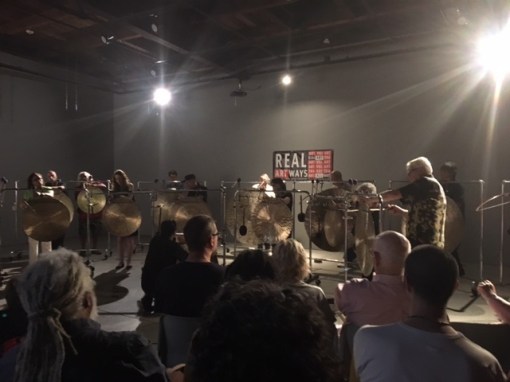
The second piece was performed by the Greater Hartford Nakatani Gong Orchestra, comprised of local community members. These dozen-plus musicians gathered the previous evening to learn the skill of bowing a gong, practiced again before the performance, and then shared their competence. With bows and mallets on gongs, the group followed a series of hand signals from Nakatani that were reminiscent of a mixture of American Sign Language and modern dance. Their sound ranged from haunting, eerie, and nerve-jarring to exciting, motivating, and energizing. It was impressive to see how skilled players could become in a relatively short time.
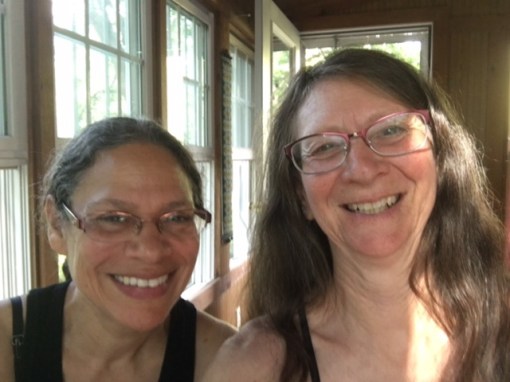
The audience, too, was eclectic and representative of the greater Hartford neighborhoods and comprised family, friends, and Real Art Ways members, among others. A short personal aside: I attended this concert because a local friend was performing. The morning of the concert when I was still uncertain but hopeful I could attend, I received a phone call from a friend from Atlanta who was driving back there from Massachusetts. She wanted to spend some time at my house and I gave her my parameters: I would be away for the morning and wanted to leave at 6:30pm for a concert. “The Gong concert,” she said! I was astounded she knew about it, and, yes, she would be there. She’d been to the previous night’s rehearsal and intuitively knew I’d be there, before I did. One of her long-time friends was also playing in the orchestra. I love it when my worlds collide!


 And then I remember
  APRIL 30, 2017
 My friend’s piece, United We Stand, was in the first room of the exhibit. She explained that fiber art has only recently been accepted in this type of show. Curator Fritchey had specifically commented earlier that she encouraged quilting and ceramics (both previously considered more hobbies than art). I realized there was much more politics to this than I had ever imagined.
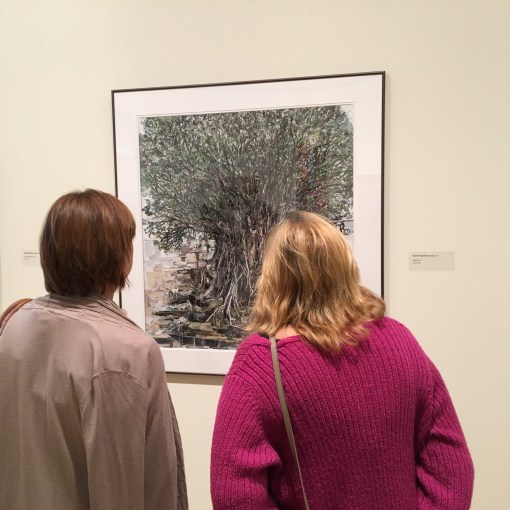 My favorite piece (no offense to my friend) was Medusa, a collage of snippets shaped into a stunning tree (probably why I was drawn to the piece initially). Only when I looked at the label did I realize how it was produced.

 ]
]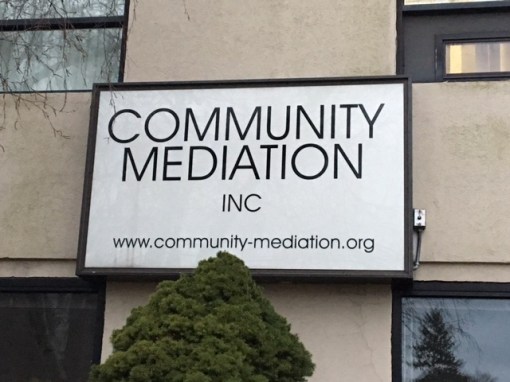 Mediation is a dynamic, structured, interactive process where a neutral third party assists disputing parties in resolving conflict through the use of specialized communication and negotiation techniques. All participants in mediation are encouraged to actively participate in the process. Mediation is a “party-centered” process in that it is focused primarily upon the needs, rights, and interests of the parties. The mediator uses a wide variety of techniques to guide the process in a constructive direction and to help the parties find their optimal solution. (Wikipedia).

 Beth Lapin