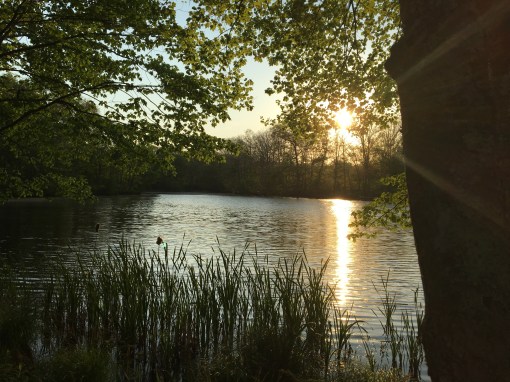
 Nestled in the woods in eastern Connecticut lies a unique, eclectic, edgy – I don’t know what – artist colony, center, living installation? Located on about 450 acres adjacent to a state park, I-Park is an anomaly, a creative endeavor, a unique way of looking at landscape, nature, and its intersection with art. Brain child of co-founders Joanne Paradis (now Executive Director) and Ralph Crispino, it provides a safe haven for creativity to prosper.
With various studios scattered over the main blueprint of the property, this international artist-in-residency program is far from the madding crowd and provides a place of peace and restorative energy. Since 2001, more than 800 artists have created visual, auditory, and textual pieces both inside and on the landscape.


Recently, a ribbon cutting ceremony opened new studio space, and simultaneously welcomed twelve 2017 site responsive artists-in-residence from wide ranging locations (USA, China, Sweden, Japan, and the Netherlands). They will be provided with bird walks, history talks, and other presentations to provide a sense of their location, to be integrated into their work while on site.
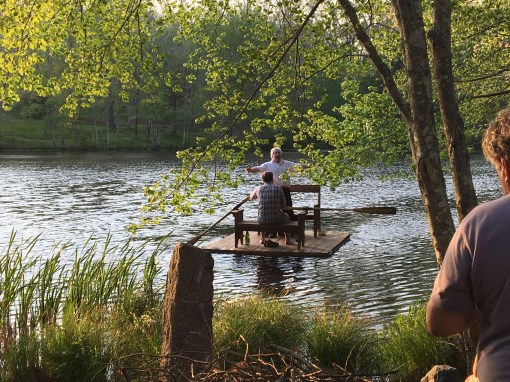 Ceremony attendees were treated to a vocal performance by Raymond C. White, who sang O Sole Mio and other works in a bellowing voice as he was transported across a beautiful pond on a floating platform by its constructor Ted Efremoff. The sun set behind them as they docked what was called the “Floating Living Room.” Minds that think of terms like that follow different neuron pathways than the common brain. Where do they get these ideas? The novelty, creativity, and uniqueness of their thoughts and visions manifest themselves across the I-Park landscape which provides the environment to “nurture artists and the creative process.”
 Many religious groups have prohibitions about food and drink consumption. For example, certain Christian groups (Pentecostal, Baptist, Methodist, and Mormon), Buddhist, and Muslims are restricted from drinking alcoholic beverages. Jews and Muslims don’t eat pork, while Jews additionally avoid shellfish and other bottom dwellers. Seventh Day Adventists, Buddhists, and other Indian groups refrain from eating animals completely.
 We know that what we put into our bodies impacts our health, with clear examples such as cigarettes and some less obvious ones (artificial sweeteners, sugar, MSG, and so on). Exponential increases in diabetes and obesity highlight the importance of what we ingest.
 Just as important as physical consumption is emotional exposure to healthy information and entertainment. When we allow ourselves to read or listen to certain news shows or violent material, our visceral responses cause hormonal reactions in our bodies. Our anxiety or fear rises. Instead we can choose what we read, watch, and use as “entertainment” and skip the adrenalin and cortisol rush. In addition, we can increase our exposure to trees, which produce a substance that actually improves our immune response. Our leisure time choices make a difference.
 12 MAY 2017
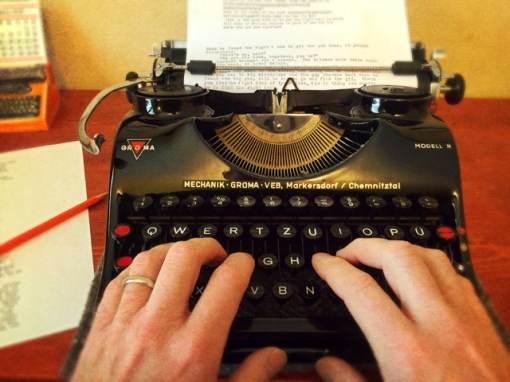 In fact, as I write this, I am trying to do exactly that. I am letting my fingers type my thoughts with the desire that something from my inner voice will come through and share itself with you. I dare hope that what I write will resonate with you, and there will be a small moment of “yes.”
 APRIL 30, 2017
 My friend’s piece, United We Stand, was in the first room of the exhibit. She explained that fiber art has only recently been accepted in this type of show. Curator Fritchey had specifically commented earlier that she encouraged quilting and ceramics (both previously considered more hobbies than art). I realized there was much more politics to this than I had ever imagined.
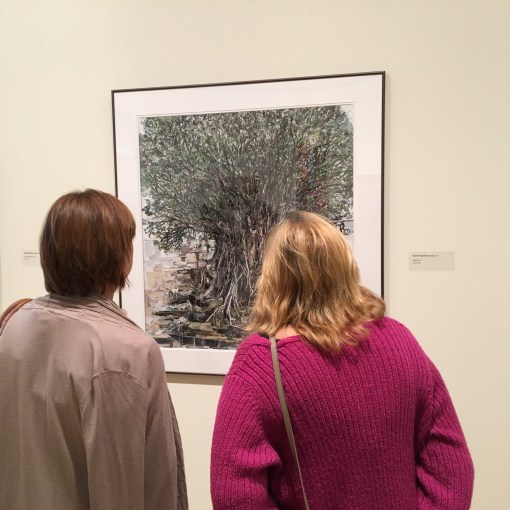 My favorite piece (no offense to my friend) was Medusa, a collage of snippets shaped into a stunning tree (probably why I was drawn to the piece initially). Only when I looked at the label did I realize how it was produced.
 Judeo-Christian doctrine holds the position of “Thou Shalt Not Steal,” which referred to both a person’s body (as in kidnapping or slavery) and possessions. The Second Buddhist Precept advises “Take not that which was not given.” I would guess that all of us are pretty much in agreement about our willingness to not kidnap someone or take them into slavery. And probably the vast majority of us reading this will leave another’s property alone, maybe even when it’s not locked up. That is what I call passive alignment with the statement.




 Beth Lapin