27 June 2017


We are being eaten alive by gypsy moths in my area. Droppings all over the driveways and porches. Gathering clusters of leaf parcels clipped off and wasted. Trunks of trees lined with crawling caterpillars. Long black lines of final instars inching along leaves and stems of trees…oaks and maples, apples and beech, almost any green thing and every kind.


I look into the canopy and I see sky when I should see leaves. My heart aches for these trees, some in areas previously devastated by hemlock woolly adelgid, and now this. I know how important trees are for the exchange of oxygen and carbon dioxide; we breathe in O2 and out CO2, while trees do the opposite and we form a complementary respiratory cycle. I can feel them struggling to get enough food and oxygen to survive.
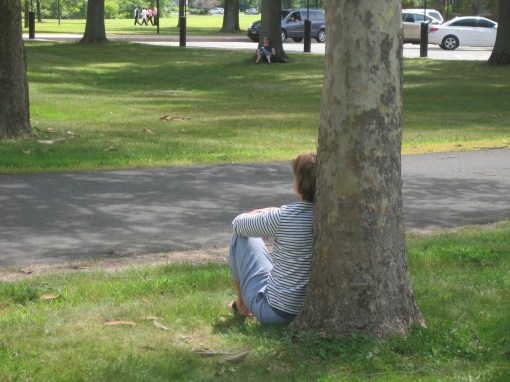 And then I remember tonglen meditation. It’s a Buddhist practice of “give and take,” an opportunity to support those in pain. I stand under the trees, I inhale and take in all their pain, suffering, and difficulties that these gypsy moths cause. And I exhale my strongest wishes for the good health and continued sustenance of the trees. I do this multiple times until I have no more to give, or I feel I’ve done enough, or I run out of breath. I’ve asked groups of people on my hikes to do this. Twenty-plus of us standing under a group of gypsy moth-stricken trees, all breathing with them, supporting the trees that help us breathe.
I encourage you to do the same.
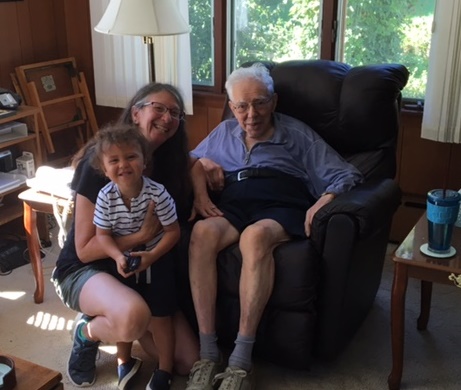
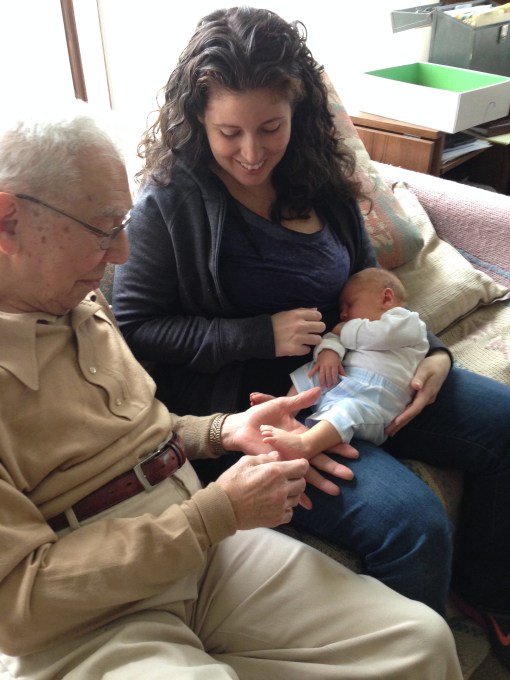 Who could forget when he split his pants in the middle to Plant Street, as he rushed around gathering receipts from Youth Colony that he’d left on the top of the car when he drove off? Or when he had words of wisdom, looking at Ori’s newborn feet or always asked for Ori when I’d come to visit alone?
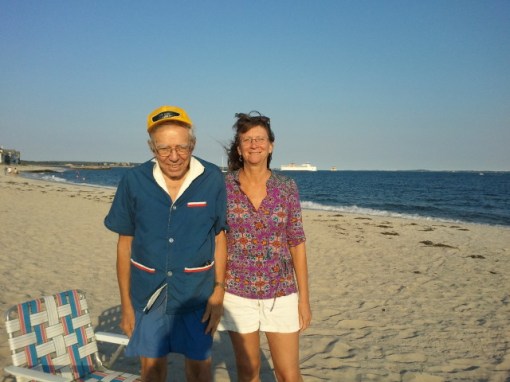 After Aunt Rivie died, Uncle Larry was well cared for by our families and friends. He was able to enjoy many aspects of life including time in his home, events with family, and trips to the beach.
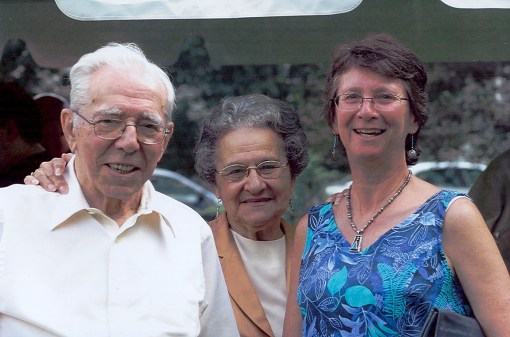 We know that Aunt Rivie and Uncle Larry are now cruising around again together, and they aren’t worrying about a crackdown!
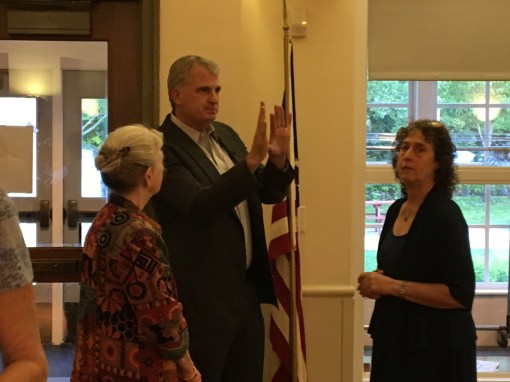 Timothy Snyder gives an engaging lecture, full of well-worded descriptions and definitions that make instantaneous sense. His recent presentation, attended by more than 200 in the shoreline town of Guilford, was eye-opening, thought provoking, inspiring, and terrifying.
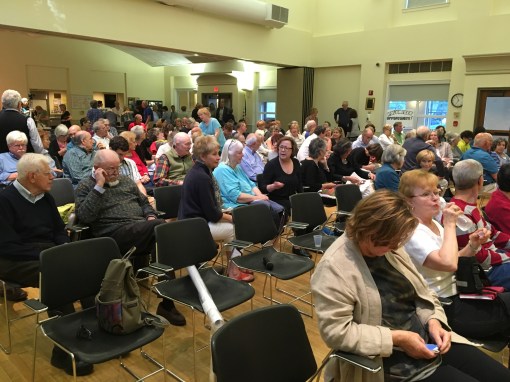 During his lecture, he differentiated between a patriot and nationalist. Reading from one of his book lessons, Be a patriot: “A patriot…wants the nation to live up to its ideals, which means asking us to be our best selves…..A patriot has universal values, standards by which he judges his nation, always wishing it well—and wishing that it would do better.” On the other hand, “A nationalist ‘brood[s] on power, victory, defeat, revenge’ …[and] encourages us to be our worst, and then tell us that we are the best.”
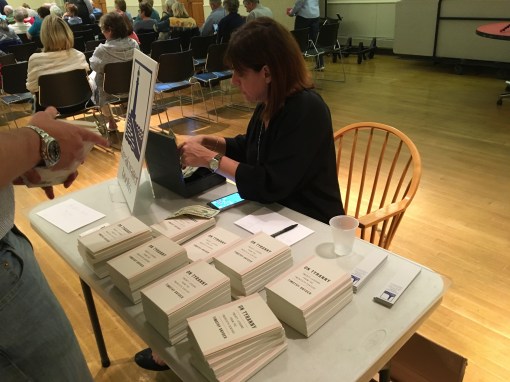 One of Snyder’s lessons is Make eye contact and small talk. Keep connected to others in the community, especially those who are under attack. During Hitler’s time, a turning point occurred when citizens would cross the street to avoid their Jewish neighbors. We need to recognize each other’s humanity and right to exist, regardless of our different opinions. That’s what has made this country so amazing: freedom of speech and pursuit of happiness, people with many views living here in relative freedom and peace. Snyder believes these points are currently under threat and that those of us who cherish these values can take action, make steps, and keep the United States a democratic republic “with liberty and justice for all.”
 11 June 11, 2017
 “You should join the Descendants of the New England Hebrew Farmers of the Emanuel Society (NEHFES),” he said. I didn’t think my great-grandparents had been part of the society, but Jerry assured me it didn’t matter. Over the winter, I researched our family’s history and discovered deeds for The Farm, including mortgages to Baron von Hirsch, typical of NEHFES members. I was in!
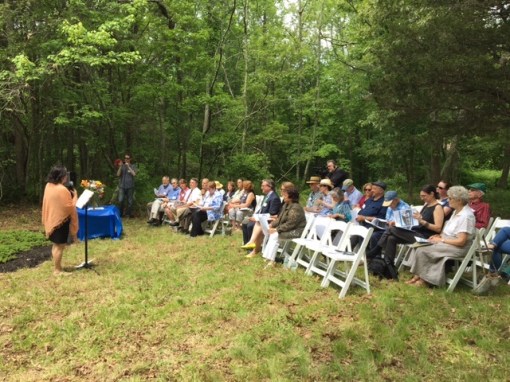 Which brings me to the present. On June 11, I attended a celebration of NEHFES’s 125th anniversary, held at the site of the former synagogue, mikvah (ritual bath), and creamery. The program was rich with information: Nancy Savin, president, welcomed everyone and read a letter from State Senator Richard Blumenthal. Rabbi Marc Ekstrand gave an invocation, followed by commentary from previous (Mary Donohue) and current (Catherine Labadia) staff from Connecticut State Historic Preservation Office. Montville’s historian Jon Chase (who had assisted with pinpointing my family’s farm’s location) provided the historical development of religious groups in the area.
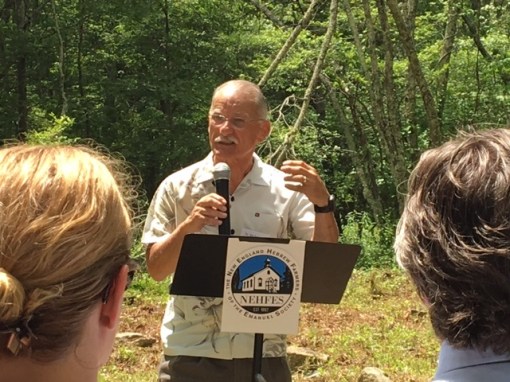 Nick Bellantoni, former state archaeologist, described student excavations, while Dr. Miller, from UCONN, talked about some of the unique features of the site.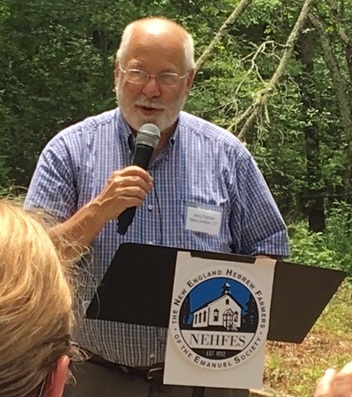

 The weather isn’t great, but it is better than we’d been having, so Cherry and I set off for the Windsor Locks Canal Trail which runs parallel to the Canal and Connecticut River. We park at the abandoned factory and walk north along the canal, built in the 1800s to bypass Enfield Rapids. The initial section is fairly industrial but we have lots to share, so the surroundings don’t matter as much.
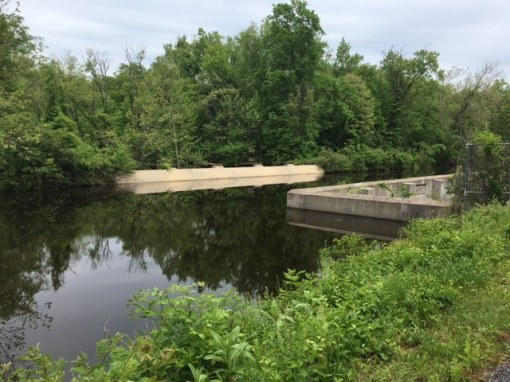
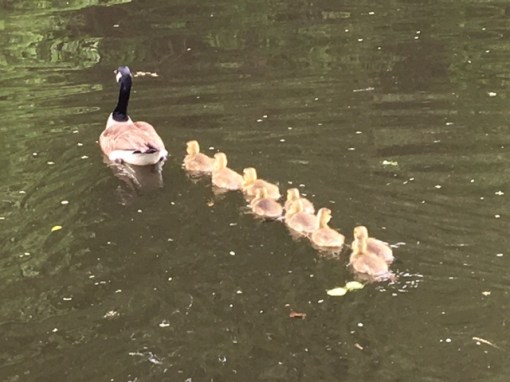 As we continue northerly, we enjoy seeing several families of geese, signs of beaver, and lovely views of the Connecticut River. We pass several walkers and bicyclists, including one woman training a Shephard for K-9 work. We go about two miles, to the Stony Brook Aquaduct, where we sit for a few minutes on a strategically placed bench. Someone had written lyrics (Van Morrison’s Moonsdance, Blue Jean Blues, Little Feat) on the bridge pillars. By then, the sun is peaking out and we head back to the car.
 I talk about trying to find my balance, now that many things in my life are stable. I’ve taught an ecotherapy class at UCONN that went well, I’m winding down at the Middletown Arts Office, and want to start putting my usual activities back into my life. Some interesting whispers have come my way, and I am interested to see what develops from any of them.
 Beth Lapin