18 June 2017
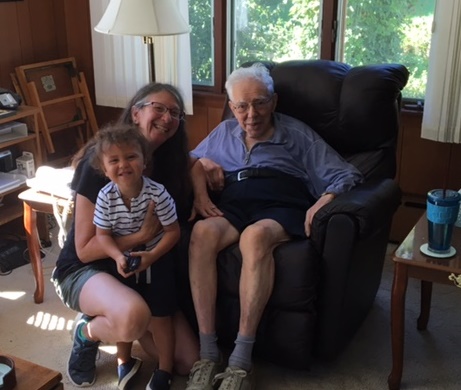
My 92 year-old Uncle Larry has passed away — it is sad, the end of an era, but he went peacefully. Their home was always open for me, my second home. Uncle Larry was a voice of reason, an understanding listener, an engaging story-teller, and a goofball.
We won’t have any new Uncle Larry memories, but his stories will live on. Who can forget how he’d get lost on the way back from the bathroom or empty the dishwasher in the middle of the night, or goad Auntie Ruthie just to get a rise out of her (and she did rise to the occasion)?
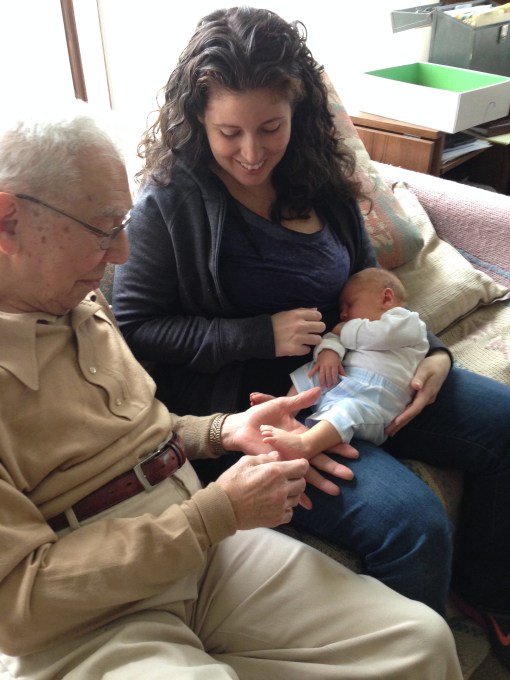 Who could forget when he split his pants in the middle to Plant Street, as he rushed around gathering receipts from Youth Colony that he’d left on the top of the car when he drove off? Or when he had words of wisdom, looking at Ori’s newborn feet or always asked for Ori when I’d come to visit alone?
Who could forget when he drove so close to the telephone pole on Pequot Avenue that I had to pull in my right arm resting on the window and jerk the steering wheel towards the center of the road? Or when Kay stopped college for awhile and he said, “Well, there’s no point in going if she doesn’t want to,” without judgement or criticism. Or when you’d hear that certain tone of voice, “Lah” from Aunt Rivie and you knew he was in trouble and his eyebrows would rise and his bottom lip would push forward and he had a special twinkle in his eye. When she called him “Lawrence,” we knew he was really in trouble.
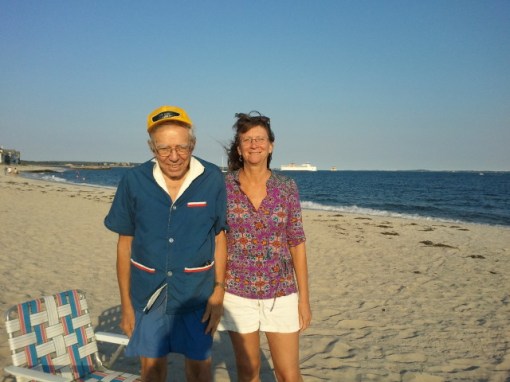 After Aunt Rivie died, Uncle Larry was well cared for by our families and friends. He was able to enjoy many aspects of life including time in his home, events with family, and trips to the beach.
We will miss the new memories, we will cherish the old ones. We all loved Uncle Larry and he loved all of us. He made us laugh and feel good about ourselves.
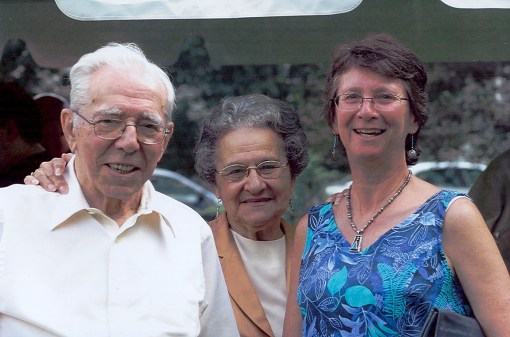 We know that Aunt Rivie and Uncle Larry are now cruising around again together, and they aren’t worrying about a crackdown!
And what does this mean to me? I inch closer to being an Elder, a role I feel incompetent to take. More places remind me of the past, than the present or future. But we have three new babies coming in the family, a poignant reminder that life is a cycle and goes on. That I can grab with gusto. Life is for the living.
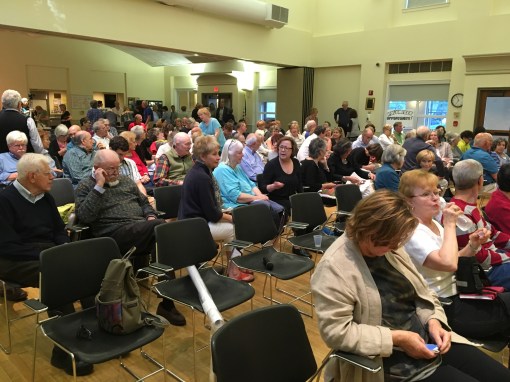
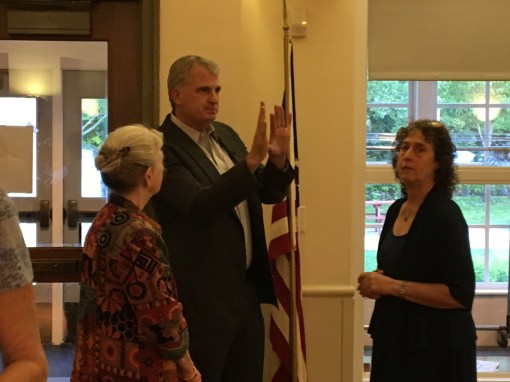 Timothy Snyder gives an engaging lecture, full of well-worded descriptions and definitions that make instantaneous sense. His recent presentation, attended by more than 200 in the shoreline town of Guilford, was eye-opening, thought provoking, inspiring, and terrifying.
 During his lecture, he differentiated between a patriot and nationalist. Reading from one of his book lessons, Be a patriot: “A patriot…wants the nation to live up to its ideals, which means asking us to be our best selves…..A patriot has universal values, standards by which he judges his nation, always wishing it well—and wishing that it would do better.” On the other hand, “A nationalist ‘brood[s] on power, victory, defeat, revenge’ …[and] encourages us to be our worst, and then tell us that we are the best.”
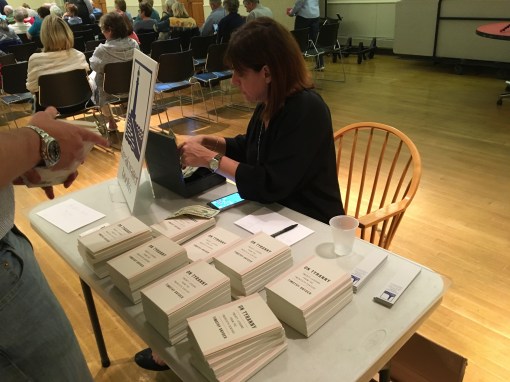 One of Snyder’s lessons is Make eye contact and small talk. Keep connected to others in the community, especially those who are under attack. During Hitler’s time, a turning point occurred when citizens would cross the street to avoid their Jewish neighbors. We need to recognize each other’s humanity and right to exist, regardless of our different opinions. That’s what has made this country so amazing: freedom of speech and pursuit of happiness, people with many views living here in relative freedom and peace. Snyder believes these points are currently under threat and that those of us who cherish these values can take action, make steps, and keep the United States a democratic republic “with liberty and justice for all.”
 11 June 11, 2017
 “You should join the Descendants of the New England Hebrew Farmers of the Emanuel Society (NEHFES),” he said. I didn’t think my great-grandparents had been part of the society, but Jerry assured me it didn’t matter. Over the winter, I researched our family’s history and discovered deeds for The Farm, including mortgages to Baron von Hirsch, typical of NEHFES members. I was in!
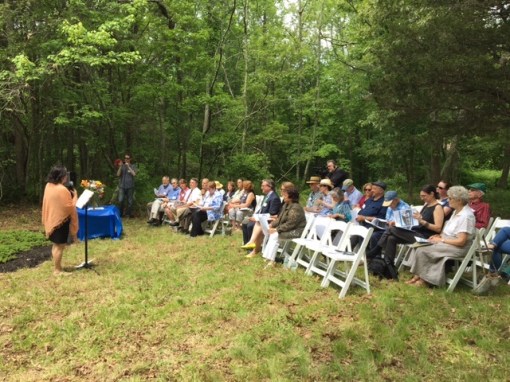 Which brings me to the present. On June 11, I attended a celebration of NEHFES’s 125th anniversary, held at the site of the former synagogue, mikvah (ritual bath), and creamery. The program was rich with information: Nancy Savin, president, welcomed everyone and read a letter from State Senator Richard Blumenthal. Rabbi Marc Ekstrand gave an invocation, followed by commentary from previous (Mary Donohue) and current (Catherine Labadia) staff from Connecticut State Historic Preservation Office. Montville’s historian Jon Chase (who had assisted with pinpointing my family’s farm’s location) provided the historical development of religious groups in the area.
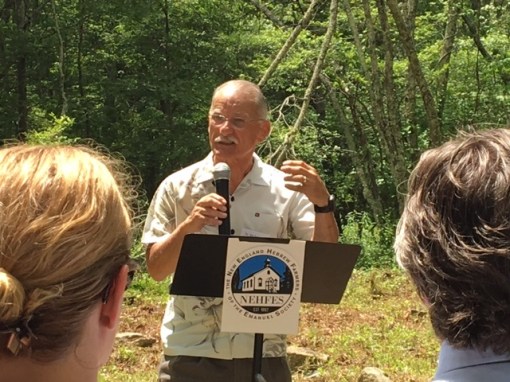 Nick Bellantoni, former state archaeologist, described student excavations, while Dr. Miller, from UCONN, talked about some of the unique features of the site.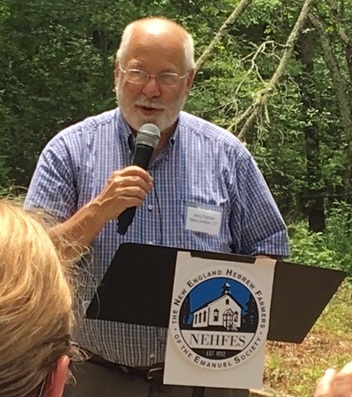

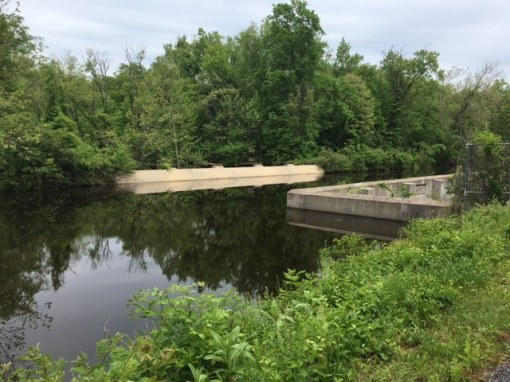
 The weather isn’t great, but it is better than we’d been having, so Cherry and I set off for the Windsor Locks Canal Trail which runs parallel to the Canal and Connecticut River. We park at the abandoned factory and walk north along the canal, built in the 1800s to bypass Enfield Rapids. The initial section is fairly industrial but we have lots to share, so the surroundings don’t matter as much.
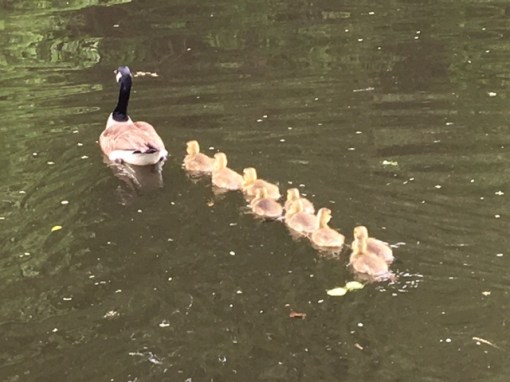 As we continue northerly, we enjoy seeing several families of geese, signs of beaver, and lovely views of the Connecticut River. We pass several walkers and bicyclists, including one woman training a Shephard for K-9 work. We go about two miles, to the Stony Brook Aquaduct, where we sit for a few minutes on a strategically placed bench. Someone had written lyrics (Van Morrison’s Moonsdance, Blue Jean Blues, Little Feat) on the bridge pillars. By then, the sun is peaking out and we head back to the car.
 I talk about trying to find my balance, now that many things in my life are stable. I’ve taught an ecotherapy class at UCONN that went well, I’m winding down at the Middletown Arts Office, and want to start putting my usual activities back into my life. Some interesting whispers have come my way, and I am interested to see what develops from any of them.
 Nestled in the woods in eastern Connecticut lies a unique, eclectic, edgy – I don’t know what – artist colony, center, living installation? Located on about 450 acres adjacent to a state park,


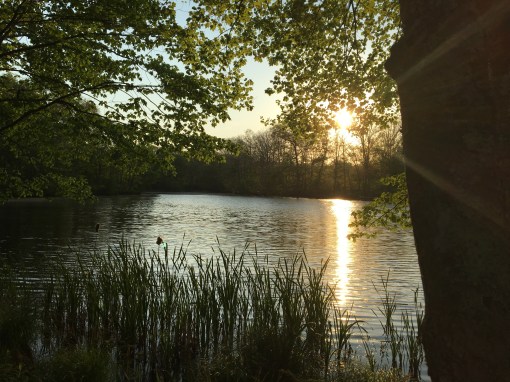
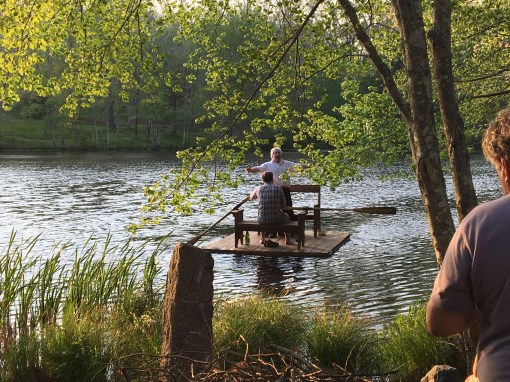 Ceremony attendees were treated to a vocal performance by Raymond C. White, who sang O Sole Mio and other works in a bellowing voice as he was transported across a beautiful pond on a floating platform by its constructor Ted Efremoff. The sun set behind them as they docked what was called the “Floating Living Room.” Minds that think of terms like that follow different neuron pathways than the common brain. Where do they get these ideas? The novelty, creativity, and uniqueness of their thoughts and visions manifest themselves across the I-Park landscape which provides the environment to “nurture artists and the creative process.”
 Many religious groups have prohibitions about food and drink consumption. For example, certain Christian groups (Pentecostal, Baptist, Methodist, and Mormon), Buddhist, and Muslims are restricted from drinking alcoholic beverages. Jews and Muslims don’t eat pork, while Jews additionally avoid shellfish and other bottom dwellers. Seventh Day Adventists, Buddhists, and other Indian groups refrain from eating animals completely.
 We know that what we put into our bodies impacts our health, with clear examples such as cigarettes and some less obvious ones (artificial sweeteners, sugar, MSG, and so on). Exponential increases in diabetes and obesity highlight the importance of what we ingest.
 Just as important as physical consumption is emotional exposure to healthy information and entertainment. When we allow ourselves to read or listen to certain news shows or violent material, our visceral responses cause hormonal reactions in our bodies. Our anxiety or fear rises. Instead we can choose what we read, watch, and use as “entertainment” and skip the adrenalin and cortisol rush. In addition, we can increase our exposure to trees, which produce a substance that actually improves our immune response. Our leisure time choices make a difference.
 12 MAY 2017
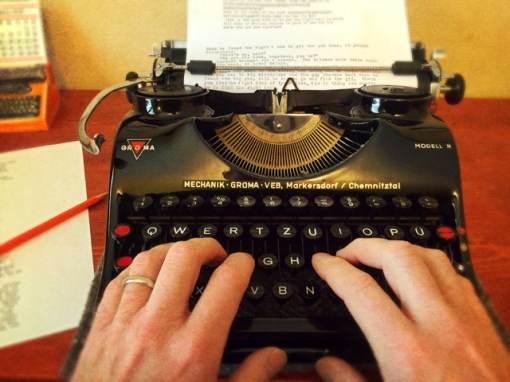 In fact, as I write this, I am trying to do exactly that. I am letting my fingers type my thoughts with the desire that something from my inner voice will come through and share itself with you. I dare hope that what I write will resonate with you, and there will be a small moment of “yes.”
 APRIL 30, 2017
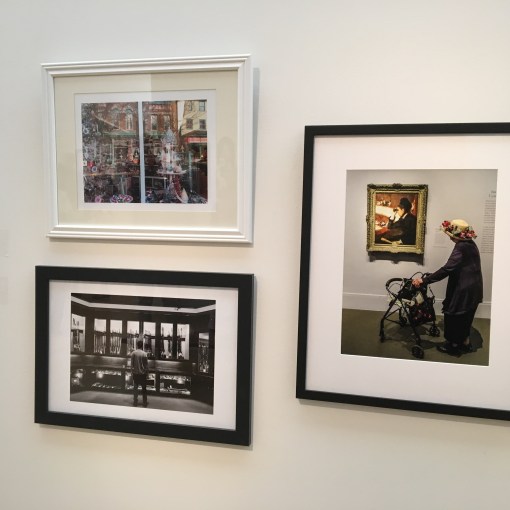
 My friend’s piece, United We Stand, was in the first room of the exhibit. She explained that fiber art has only recently been accepted in this type of show. Curator Fritchey had specifically commented earlier that she encouraged quilting and ceramics (both previously considered more hobbies than art). I realized there was much more politics to this than I had ever imagined.
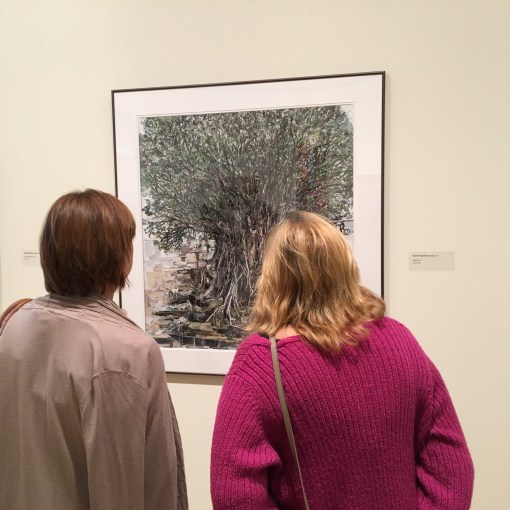 My favorite piece (no offense to my friend) was Medusa, a collage of snippets shaped into a stunning tree (probably why I was drawn to the piece initially). Only when I looked at the label did I realize how it was produced.
 Judeo-Christian doctrine holds the position of “Thou Shalt Not Steal,” which referred to both a person’s body (as in kidnapping or slavery) and possessions. The Second Buddhist Precept advises “Take not that which was not given.” I would guess that all of us are pretty much in agreement about our willingness to not kidnap someone or take them into slavery. And probably the vast majority of us reading this will leave another’s property alone, maybe even when it’s not locked up. That is what I call passive alignment with the statement.


 Beth Lapin